
The better question is how to avoid the call. An ice dam is a symptom of heat escaping into your attic, and you can fix the cause. This guide explains how dams form, why steam beats a hammer, what drives the cost, and what to do before the first hard freeze.
Why do ice dams form on my roof?
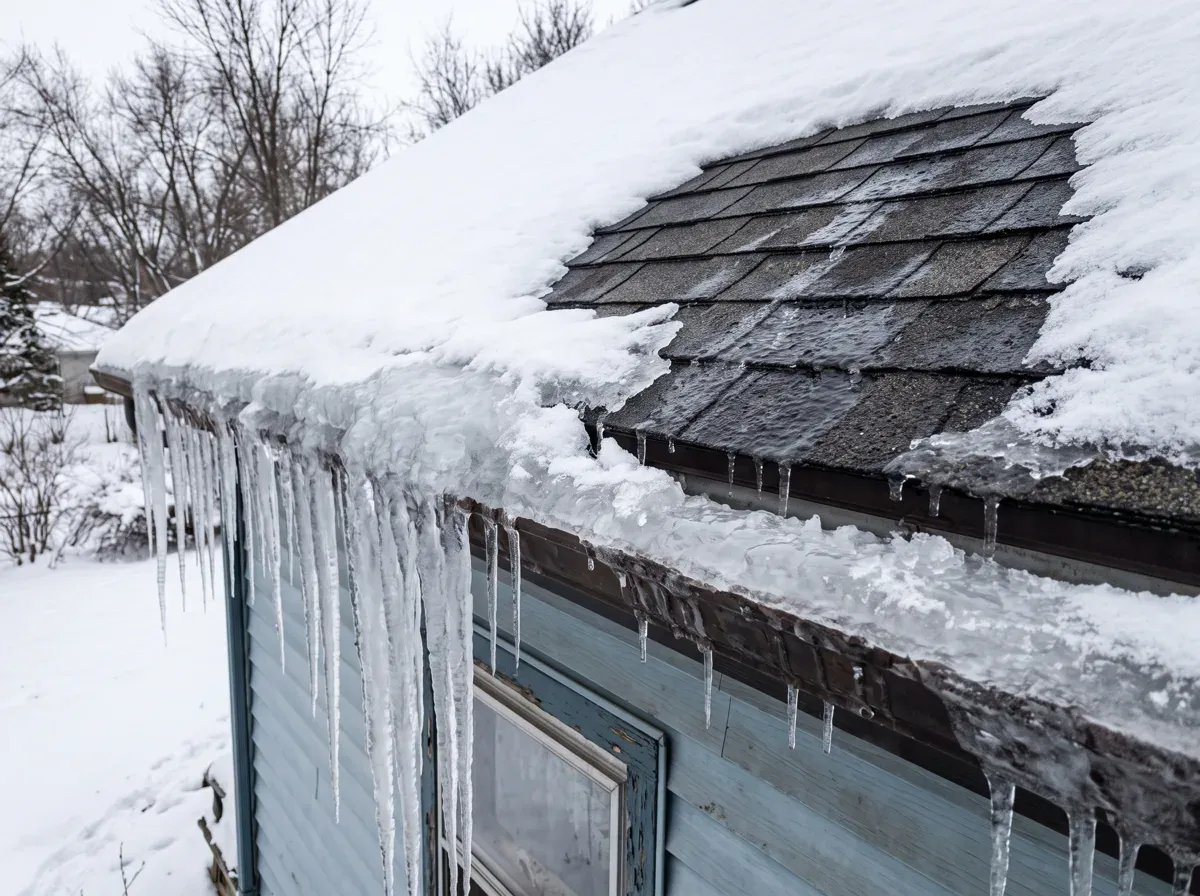
An ice dam needs three things: snow on the roof, heat escaping from the house, and cold air at the eave. Nebraska winters supply the snow and the cold. Your attic supplies the heat.
Here is the sequence:
- Warm air leaks from the living space into the attic. It comes through gaps around light fixtures, attic hatches, bath fan ducts and top plates.
- That heat warms the roof deck. Snow on the upper roof melts.
- Meltwater runs down the slope until it reaches the eave. The eave overhangs the wall, so it stays as cold as the outdoor air.
- The water refreezes there. Layer after layer builds a ridge of ice along the edge.
- New meltwater pools behind the ridge, finds gaps between shingles and lifts under them.
Then it drips into the attic and shows up as a stain on the ceiling. Omaha's freeze-thaw swings, sunny days near freezing and nights well below, feed the cycle. Homes with poor attic insulation or weak ventilation see it first. The University of Minnesota Extension has a clear write-up of the same mechanism.
A roof ice dam is not always a sign of a bad roof. A newer home in Papillion can be just as prone as an older house near downtown Omaha, because heat loss and airflow decide it, and age does not.
Is it safe to chip ice dams off a roof?
No. Chipping is the most common way homeowners turn a leak into a repair bill.
- Shingles crack. Cold shingles are brittle. A hammer, shovel or ax tears granules off and breaks tabs, and the damage opens new leak paths.
- Gutters and flashing get bent. Ice often fuses to metal. Prying tears it loose.
- Falls happen. A ladder on icy ground, a roof edge slick with frost and a person swinging a tool is how people get hurt.
- Rock salt corrodes. Salt melts a narrow channel, but it stains and eats at metal, damages shingles and kills the plants below the drip line. The ice around it stays.
A roof rake pulled from the ground can clear snow off the lowest few feet of roof before it melts and refreezes. That is the safe DIY step. Everything past that is a job for a trained crew.
Ice dam steaming: how removal works
Ice dam steaming uses hot steam to melt the ice in place. The crew works along the eave, opens drainage paths through the dam and lets the meltwater run off, without striking the roof. When the ice is gone from the shingle line and the gutters, the water has a path out again.
It is the method we use at Executive Cleaning Services. Our technicians are employees, never subcontractors, and we are fully insured. They work from ladders protected with moving blankets under the feet and wool bonnets on the tops, so siding and gutters are not marked while they work.
Steam clears the dam that exists. It does not stop the next one. If the attic is leaking heat, ice will build again after the next snow and warm-up, which is why prevention matters.
You can read the service details on our ice dam removal in Omaha page.
Ice dam removal cost: how much per foot?
We quote ice dam removal by the foot, along the linear feet of roof edge that carry ice, and we schedule it the same week. We do not publish a dollar amount here because what the crew finds up there differs from one roof to the next.
How much does ice dam removal cost per foot? Ask for the rate on your house, since these variables set it:
| Cost driver | Why it changes the quote |
|---|---|
| Linear feet of affected eave | The core measure. More edge means more steam time. |
| Ice thickness | A thin ridge clears fast. A thick, layered dam takes much longer. |
| Roof height and pitch | A one-story ranch is quicker to reach than a steep three-story. |
| Ladder access | Fences, decks, snowdrifts and slick ground slow the setup. |
| Gutter condition | Ice-packed, debris-filled gutters take extra work to open up. |
To get a real number by phone, tell us:
- Which sides of the house have ice.
- Roughly how many feet of eave are covered, and how thick it looks.
- How many stories tall the house is.
- Whether you see water inside.
Photos help. Text them to (402) 503-3015 and we can often quote from the picture.
Ice dam prevention: insulation, air sealing and ventilation
Prevention is a heat problem. Keep the roof deck cold and the snow melts evenly from the top or stays put, and no dam forms. The order of work matters.
| Fix | What it does | Who handles it |
|---|---|---|
| Air sealing | Stops warm house air from leaking into the attic | Insulation or weatherization contractor |
| Attic insulation | Keeps living space heat below the roof deck | Insulation contractor |
| Ventilation | Moves cold air along the underside of the roof deck | Roofer or insulation contractor |
| Clear gutters | Lets meltwater leave the roof instead of freezing in place | Gutter cleaning crew |
| Snow raking | Removes snow load at the eave before it melts | Homeowner from the ground |
Attic insulation to prevent ice dams
Seal first, insulate second. Insulation over open gaps just hides the leaks. Common gaps sit around recessed lights, the attic hatch, plumbing stacks and bath fan ducts. The recommended insulation level depends on your climate zone. The Energy.gov weatherization pages list the levels by region, and the Nebraska Extension office can point you to local guidance.
We remove ice and clean gutters. We do not install insulation, so we send homeowners to an energy auditor or insulation contractor for the attic work.
Ventilation
Soffit vents must stay open, and insulation stuffed into the eaves blocks them. Air should enter at the soffit and exit at the ridge so the roof deck stays near outdoor temperature.
Gutters
Clogged gutters make it worse. Meltwater freezes in the run, which grows the dam. Our guide on when to clean gutters in Omaha gives the dates, and our gutter cleaning in Omaha crew works through the fall. Gutter guards keep leaves out of the run, though they do not fix a warm attic. For a full-year plan, see our seasonal home maintenance guide.
The Insurance Institute for Business & Home Safety publishes guidance on winter roof protection if you want a second opinion on where to start.
Ice dam removal near me in Omaha: when to call
Call when any of these show up:
- Ice reaches past the eave and climbs the roof toward the wall line.
- Water stains or drips appear on a ceiling or an upper wall.
- Gutters look bowed or are pulling away from the fascia.
- Icicles hang in thick curtains along a full side of the house.
- You hear dripping in the attic or see wet insulation.
If water is coming in, move belongings, put a bucket down and call. Do not go up on the roof yourself.
Our shop is at 4961 S 136th St in Millard, and we serve Omaha and the surrounding metro, including Elkhorn, Papillion, La Vista, Ralston, Bellevue and Gretna. Phone is (402) 503-3015 in Omaha and (402) 421-2720 in Lincoln.
FAQ
How much does ice dam removal cost per foot?
Ice dam removal is quoted by the foot along the roof edge that carries ice, adjusted for ice thickness, roof height and access. We schedule it the same week. We do not publish a flat per-foot number because each roof differs. Call (402) 503-3015, tell us which sides are affected and how many feet, and we will give you a quote.
Is it safe to chip ice dams off a roof?
No. Cold shingles crack, granules tear off, and gutters and flashing bend under a hammer or shovel. Ladders on icy ground add a fall risk. Rock salt corrodes metal and harms plants below. If snow is fresh, rake the lowest few feet from the ground. For the ice itself, call a crew that uses steam.
Why do ice dams form on my roof?
Heat leaks from your house into the attic and warms the roof deck. Snow melts, runs to the cold eave and refreezes into a ridge. Water then backs up behind the ridge and works under shingles. Poor insulation, air leaks and weak ventilation are the usual causes. Cold weather and snow supply the rest.
Is there ice dam removal near me in Omaha?
Yes. We are in Millard and serve Omaha, Elkhorn, Papillion, La Vista, Ralston, Bellevue, Gretna and Bennington, plus Council Bluffs, Lincoln, Blair, Fremont and Ashland. Steam removal is scheduled the same week. Call (402) 503-3015 Monday through Friday, 7:30am to 5pm, and describe or text a photo of the ice.
Will attic insulation prevent ice dams?
It is the most effective lasting fix, when paired with air sealing and ventilation. Insulation keeps house heat from warming the roof deck, so snow melts evenly or stays frozen. Seal the leaks first, then add insulation to the level recommended for your climate zone. We do not install insulation, so we send homeowners to an energy auditor.
Sources
Tags: ice dam removalwinterroofOmaha
Doug Barrett
Founder of Executive Cleaning Services. Started cleaning windows as a UNO engineering student in 1986 and still runs the Millard shop. Writes the seasonal guides on this blog.
