
Older Omaha homes are the ones we worry about most. Many were built with the laundry in the basement, and later owners finished the basement around it. The vent still runs where it always did, only now it runs behind drywall where nobody looks. Here is what to watch for and what we do about it.
Why Dryer Vent Fire Risk Is Higher in Older Omaha Homes
A dryer heats air and pushes it through a metal duct to the outdoors. Along the way it carries lint, the fine fiber that your lint screen misses. Lint is dry, light and flammable. When it packs into the duct, air slows, heat builds up, and a spark or hot surface has fuel.
The U.S. Fire Administration and the NFPA both publish clothes dryer safety guidance. Both point to lint as a leading factor in these fires, and both tell homeowners to clean the vent and the area around the dryer regularly. Read them. We will not add statistics that they do not print.
Why older homes? Three reasons:
- Longer runs. The laundry room is often in the center of the house or the basement, so the vent has a long way to travel to reach an outside wall.
- More bends. Each elbow slows air and gives lint a place to catch.
- Hidden routes. Remodels tend to enclose the vent, which makes it easy to forget and hard to inspect.
If a previous owner finished the basement, or nobody remembers the vent ever being cleaned, assume it has not been fully cleared. Many of the homes we see in Dundee, Benson, Field Club and midtown fit that description.
Clogged Dryer Vent Signs to Watch For
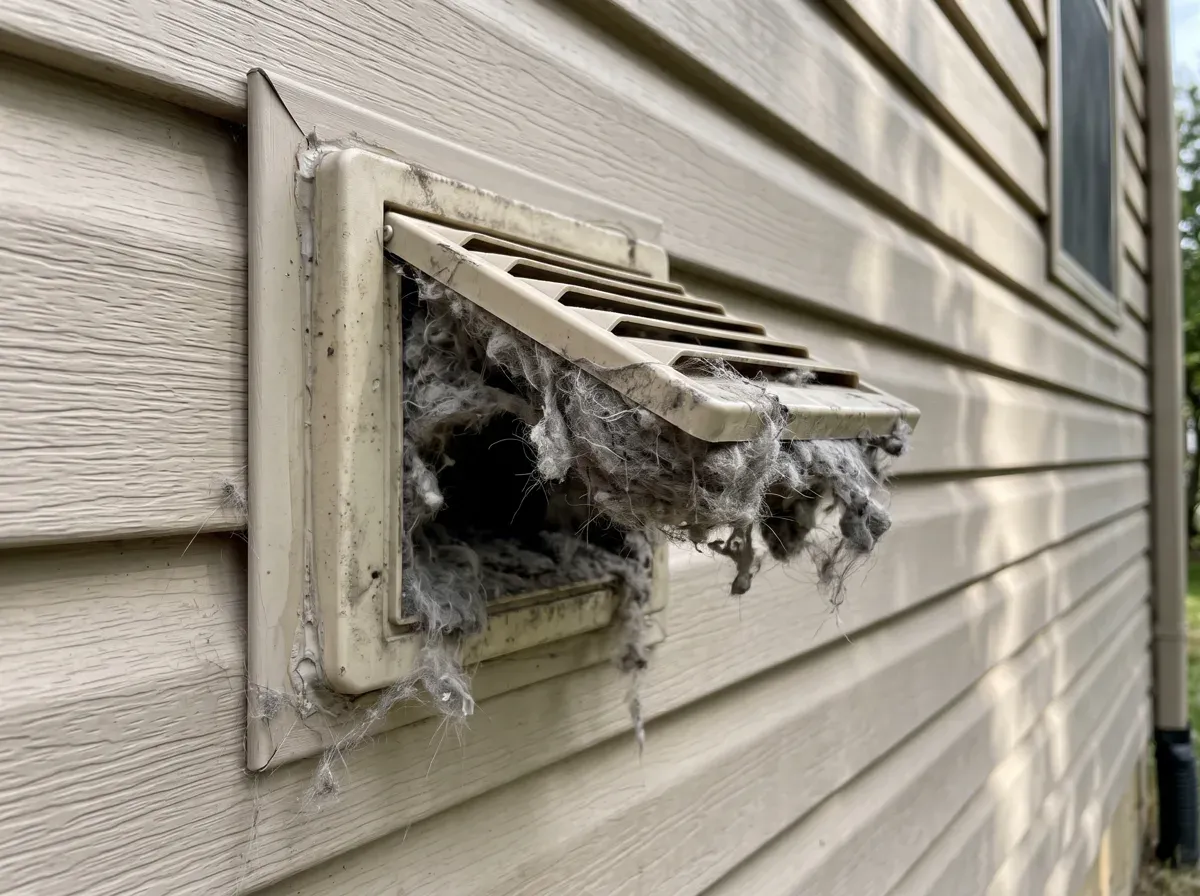
Your dryer usually tells you something is wrong before anything worse happens. Check for these:
- Longer drying times. The load comes out damp or hot but wet.
- Clothes that feel unusually hot at the end of a cycle.
- A burning or musty smell in the laundry room or on clean clothes.
- Lint around the dryer or a lint screen that clogs faster than it used to.
- A hood that does not open. Run the dryer and go outside. The flap should push open with a steady flow of warm air. If it barely moves, air is not getting out.
- Lint or nesting material at the exterior hood. Birds and rodents sometimes move in.
- The top of the dryer running hot to the touch.
- Humidity in the laundry room, or condensation on nearby windows.
How to tell if your dryer vent is clogged: a five-minute test
- Run the dryer on a normal setting for a few minutes.
- Walk outside to the exterior hood and put your hand in front of it.
- You should feel a strong, steady stream of warm air.
- Weak airflow, or none, means the line is restricted.
- Also look at the flap. If lint is hanging out of it, the vent needs attention now.
A weak result does not tell you where the blockage is. It could be the hood, a bend behind a wall, or the whole run. That is why we clear the entire line.
Dryer Takes Two Cycles to Dry Clothes: What It Means
This is the most common complaint we hear. People assume the dryer is wearing out. Sometimes it is. More often the vent is restricted, and the dryer cannot push moist air out.
Before you buy a new machine, do two things. Clean the lint screen, and wash it with soap and water once in a while, since fabric softener leaves a film that blocks airflow. Then run the outside-hood test above. If the airflow is weak, call us before you shop.
The cost of ignoring it is more than a slow dryer. You use more gas or electricity per load, you wear out your clothes faster, and you keep running a hot appliance with a partly blocked exhaust.
Dryer Vent Cleaning for Long Vent Runs and Finished Basements
This is where our years in Omaha homes matter most. A dryer on the lower level often means a run of many feet, with turns, going up through a wall or joist bay to an outside wall above grade. Some are behind finished ceilings. Some are flexible foil or plastic duct that sags and collects lint in every low spot.
If your vent fits this picture, keep these points in mind:
- Do not trust what you can see. The first few feet by the dryer may look clean while the middle of the run is packed.
- Length adds up. A longer run has more surfaces for lint to hold on to.
- Flexible duct is a trouble spot. Ridges catch lint, and crushed sections cut airflow. Smooth metal duct is the better choice when it is time to replace.
- Access matters. A finished basement may require reaching the line from the dryer end and the exterior end.
We clean from both ends when the run requires it. For a long vent run in a basement, that is the difference between a token cleaning and a complete one.
What We Do During Dryer Vent Cleaning
Our dryer vent cleaning service follows a set routine, and we take the same care in your home as we do on every job. Floor mats and shoe covers go down at the door, and our technicians are employees, never subcontractors.
- We pull the dryer away from the wall and disconnect the vent.
- We clear the line from the dryer to the exterior hood, removing lint from the entire run.
- We clean the exterior hood so the flap moves freely.
- We clean the dryer's connection point and reconnect the vent.
- We check that air moves out of the hood the way it should.
Nothing in that list is complicated. It just has to be complete. A vent cleaned from only one end, or only near the dryer, leaves the biggest deposits behind.
How Often to Clean a Dryer Vent: Is Every Year Necessary?
For most households, yes, once a year is the right answer. Here is how we would adjust it.
| Household | Suggested cleaning |
|---|---|
| Average family, normal laundry loads | Once a year |
| Large family or daily laundry | Once a year, sooner if drying times grow |
| Long vent run or finished basement | Once a year, cleaned from both ends |
| Pets that shed heavily | Once a year, checking the lint screen often |
| Lightly used dryer, short straight run | Every 1 to 2 years if airflow stays strong |
If your dryer runs a lot, your vent fills faster. If you notice the signs above, do not wait for the anniversary. A yearly cleaning is a small task next to the risk.
You can help between visits. Empty the lint screen before or after every load. Wash it now and then. Keep the space behind and around the dryer clear of lint and clutter. The Consumer Product Safety Commission also publishes home appliance safety information. Do not run the dryer when nobody is home if you can avoid it, and never run it with a blocked vent.
Dryer Vent Cleaning Cost Near Me
We do not print a flat price in a blog post, because the cost follows the run. A short, straight vent on a ground-floor laundry is a simpler job than a long basement run with bends. Ask for a quote by phone and describe where the dryer sits and where the vent exits. See our pricing page for what we publish. We are also glad to look at photos of the dryer and the outside hood.
We serve homes across Omaha and Millard, and we work in Papillion, Elkhorn, La Vista, Bellevue and Gretna. Papillion homes vary widely in age. Our Papillion home cleaning guide covers the neighborhoods, and it is a fair reminder that the older a house gets, the more likely it is to have a vent nobody has seen in years.
If you are doing duct work as well, read how often to clean air ducts. The two jobs pair well. Gutters belong on that list too, and our gutter cleaning service handles them. You can also tuck vent cleaning into the fall list in our seasonal home maintenance checklist. For the HVAC side, our air duct cleaning page explains that service.
FAQ
Why does my dryer take two cycles to dry clothes?
The most common cause is a restricted vent. When lint blocks the line, moist air cannot leave, so clothes stay damp. Clean the lint screen first, then check for strong airflow at the outside hood while the dryer runs. If airflow is weak, the vent needs cleaning from the dryer to the exterior hood.
How do I tell if my dryer vent is clogged?
Watch for longer drying times, hot clothes that stay damp, a burning smell, and lint around the dryer. Then run the dryer and check the outside hood. You should feel a strong stream of warm air and see the flap open fully. Weak or no airflow means a blockage somewhere in the line.
Is dryer vent cleaning necessary every year?
For most households, yes. Lint builds up steadily, and long runs and bends collect it faster. A yearly cleaning is a sensible schedule, and you should clean sooner if you notice longer dry times or heat. Homes with short, straight vents and light use may stretch the interval if airflow stays strong.
What do you do during a dryer vent cleaning?
We disconnect the dryer, clear the vent from the dryer to the exterior hood, clean the hood, reconnect everything, and check the airflow. On long runs we work from both ends when needed. Our technicians are employees, and they put down floor mats and shoe covers to protect your home.
Can a clogged dryer vent cause a fire?
Yes. The U.S. Fire Administration and the NFPA both identify lint buildup as a leading factor in clothes dryer fires. Restricted airflow traps heat, and lint is easy to ignite. Regular cleaning, a clear exterior hood, and paying attention to warning signs all lower the risk. Read their guidance for details.
Sources
Tags: dryer ventfire safetyhome safetyolder homes
Doug Barrett
Founder of Executive Cleaning Services. Started cleaning windows as a UNO engineering student in 1986 and still runs the Millard shop. Writes the seasonal guides on this blog.
