
We have been cleaning Omaha exteriors since 1986. This guide covers what damages siding, how green algae comes off, when to schedule the work, and what to expect from a pro.
Can You Pressure Wash Vinyl Siding?
Yes, with limits. Vinyl is tough enough to handle water and mild cleaners, and it is a poor candidate for force. The panels overlap like shingles, each locked into the one below. The seams are designed to shed water that falls down the wall. They are not designed to resist water blasted up into them.
The Vinyl Siding Institute publishes cleaning guidance for homeowners, and its approach favors gentle methods over force. That matches what we see in the field. Most siding does not need pressure at all. It needs a cleaner that does the loosening, and a rinse that carries it away.
Newer homes in Papillion and Elkhorn are often covered in vinyl, and so are many Millard homes built in the past few decades. The maintenance is the same on all of them: wash with care, and do not chase every speck with the nozzle.
Power Washing vs. Soft Washing: The Difference
The terms get mixed up, so here is the plain version.
| Power washing | Soft washing | |
|---|---|---|
| Pressure | High | Low, closer to a garden hose |
| What does the work | Water force | Cleaner, then a gentle rinse |
| Best for | Concrete, driveways, brick, sidewalks | Vinyl siding, painted surfaces, roofs, screens |
| Risk to vinyl | Higher | Low |
| Handles algae and mildew | Removes the surface, may leave roots | Kills and lifts the growth |
Soft wash siding is the right approach for most vinyl homes. The cleaner breaks down algae, mildew and grime, and a low-pressure rinse finishes the job. Pressure washing vinyl siding has its place when a pro uses it carefully on a tough spot, at a distance, and with the right tip. As a default it is the wrong tool.
That does not make power washing a bad service. Driveways, sidewalks, patios and brick are exactly what it is for. Our power washing work covers both, and we choose the method for each surface.
Does Power Washing Damage Siding? The Mistakes to Avoid
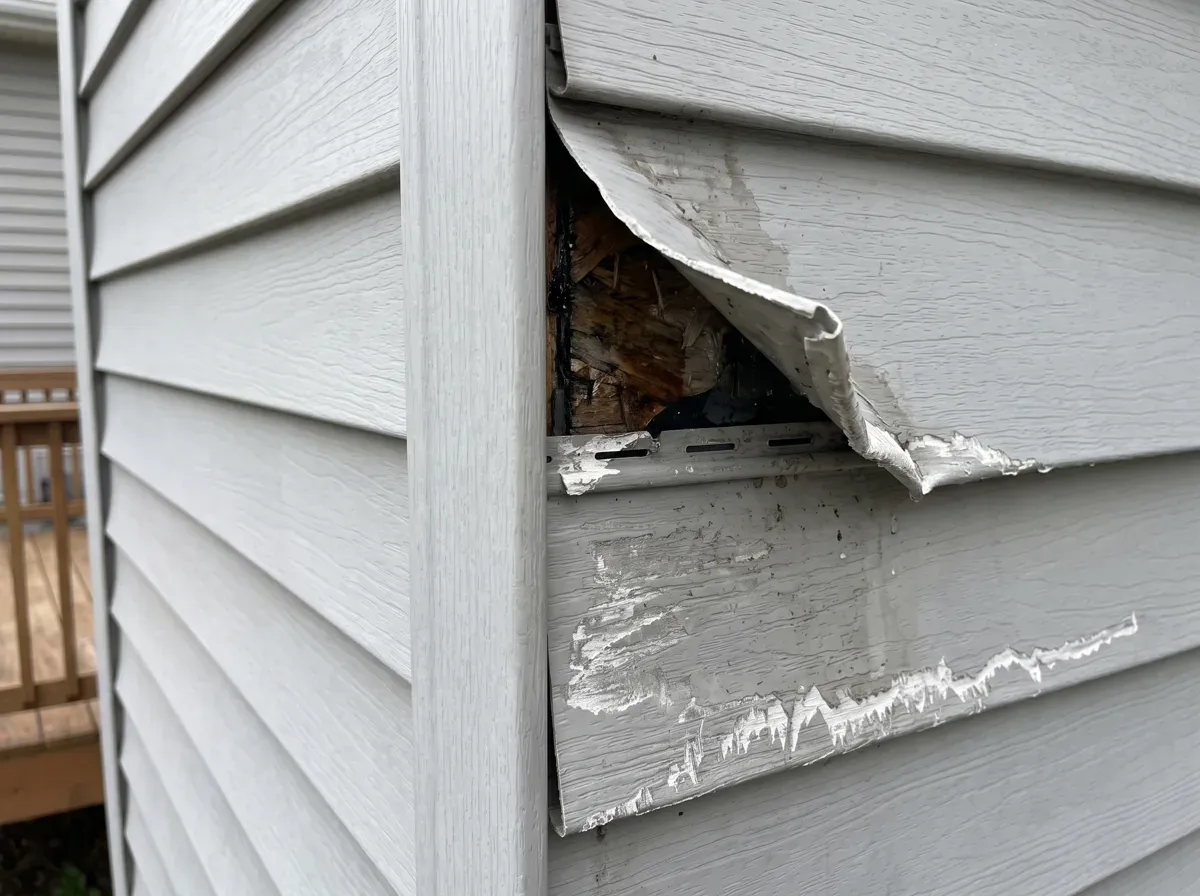
Yes, it can, and the damage usually traces back to a short list of mistakes. If you are hiring out the work, ask how the company avoids each of these. If you are doing it yourself, keep this list in front of you.
- Spraying upward. On lap siding, water shot upward gets behind the panels, into the wall cavity. Trapped moisture can lead to mold and rot that you will not see until later, and IBHS publishes home-protection guidance on keeping water out of the wall. Always spray down and along the lap, never up under it.
- Too much pressure. High pressure can gouge, crack, or warp vinyl, and it can drive water through seams and around windows.
- A tight fan tip or getting too close. A narrow tip at close range acts like a blade. Stay back and keep the wand moving.
- Skipping the cleaner. Without a cleaner you end up increasing pressure to get results, which is how the damage happens.
- Bleach without a plan. Strong bleach mixes can hurt landscaping, discolor trim, and corrode metal. Rinse plants first and use a mix made for the surface. Nebraska Extension has lawn and garden guidance if runoff worries you.
- Washing in direct sun. Cleaner dries on the wall before it can work, and you get streaks.
- Ignoring openings. Water aimed at a window, a light fixture, an outlet or a dryer vent pushes inside.
- Dirty rinse water running down clean areas. Work top to bottom, one section at a time.
Older, faded vinyl is the most fragile, since it may have become brittle over the years. A gentler approach matters more there.
How to Remove Green Algae From Vinyl Siding
Green streaks on the north and shaded sides of a house are almost always algae, and sometimes mildew. Omaha's humid summers and shade from mature maples and oaks give them plenty to work with.
Here is how the job goes when done right:
- Wet the plants and surfaces nearby so cleaner does not damage them.
- Apply a cleaner suited to algae and mildew, working from the bottom up so streaks do not form, then letting it dwell for the time the product calls for.
- Lightly agitate stubborn spots with a soft-bristle brush.
- Rinse from the top down at low pressure, keeping the water moving along the lap.
- Rinse the plants again and let the wall dry.
A few tips if you do this yourself. Test a small, hidden area first. Do not let cleaner dry on the wall. Wear eye protection and gloves. Work in shade or on a cool, overcast day. Green often returns first on the shaded side, and it comes back faster if trees are close, so trimming branches can help.
Best Time of Year to Power Wash a House in Nebraska
The window that works best runs from March through October. Here is how the year breaks down in and around Omaha.
- Late March to May. Temperatures are workable after the last freeze, which typically arrives in mid to late April. The National Weather Service Omaha office has current forecasts. This is a good time to knock off winter grime. Spring is busy, though, and storms bring pollen and wind-blown debris.
- Summer. Fine for washing, as long as you avoid direct midday sun. Cottonwood fluff in late May and June can settle on wet surfaces, so plan around it.
- September and October. Often the best conditions of the year. Leaves have not fallen yet, and you can wash before the first freeze, which averages around the third week of October.
- November to February. Not a season for washing. Freezing temperatures leave ice on walls and driveways, and water in cracks freezes and expands.
For the best results, do your gutters first, then siding, then windows. Falling debris and dirty water from the gutters will otherwise streak clean walls. Our guide on when to clean gutters in Omaha has the timing. When the siding is done, window cleaning finishes the exterior, and gutter cleaning should come before either.
Driveways, Decks and Sealing
Siding is only part of the exterior. The same crew and equipment take care of the rest.
Driveway pressure washing. Concrete can take real pressure. Oil, tire marks, algae in the shade and winter salt residue all respond well to a surface cleaner and the right technique. Work in even passes so you avoid stripes.
Decks and patios. Wood needs less force than concrete, since high pressure lifts and fuzzes the grain. Clean, let it dry fully, then think about sealing.
Sealing. Power washing and sealing work as a pair. A sealer protects a clean surface from moisture and sun, and it does not do much on top of dirt. We clean first, let the surface dry, then seal. Nebraska's freeze-thaw cycles are hard on concrete and wood, and sealing slows down the wear.
For these jobs we do free on-site bids. We see the surface, we tell you what it needs, and you decide.
Washing Before or After Selling a Home
If you plan to list your house, a wash is one of the simplest ways to improve how it looks in photos and at a showing. Siding, driveway, front walk and deck are what buyers see first.
Two tips. Wash a few weeks before photos so any spots you find can be dealt with. And schedule it after any exterior repairs, painting or trim work, since those create dirt. If you have just bought a home, a wash shows you the true color of the siding and helps you spot damage you want to fix.
We work across Papillion and Elkhorn, and throughout the Omaha metro. For a full-year plan, see our seasonal home maintenance checklist. Spring cleaning of glass is covered in spring window cleaning in Omaha.
FAQ
Can you pressure wash vinyl siding?
Yes, but gently. Use low pressure, keep the wand moving, and spray downward along the lap. Never spray upward under the panels, because water can get behind them. Most homes do best with a soft wash, where a cleaner does the work and a low-pressure rinse carries it away.
Does power washing damage siding?
It can. High pressure, a narrow tip, spraying upward, and holding the nozzle too close are the usual causes. They can crack or warp vinyl and force water behind the panels. A careful low-pressure wash with the right cleaner cleans well and leaves the siding intact.
How do you remove green algae from vinyl siding?
Apply a cleaner made for algae and mildew, let it dwell, brush stubborn spots lightly, and rinse from the top down at low pressure. Protect plants first and never let the cleaner dry on the wall. Trimming branches that shade the wall slows the return of green.
What is the best time of year to power wash a house in Nebraska?
March through October is the working season. Spring after the last freeze and early fall before the first freeze are usually the best windows. Avoid direct midday sun, and skip winter, when freezing temperatures leave ice and can turn water in cracks into damage.
What is the difference between power washing and soft washing?
Power washing uses high pressure to blast dirt from hard surfaces like concrete and brick. Soft washing uses low pressure and a cleaner that kills and lifts algae, mildew and grime. Soft washing suits vinyl siding, painted surfaces and other delicate areas, while power washing suits driveways and walks.
Sources
Tags: power washingvinyl sidinghouse washingexterior cleaning
Doug Barrett
Founder of Executive Cleaning Services. Started cleaning windows as a UNO engineering student in 1986 and still runs the Millard shop. Writes the seasonal guides on this blog.
