
That is the short answer for air duct cleaning Omaha homeowners ask about most. The longer answer is that duct cleaning is not a cure-all, and the EPA says so plainly. Below we cover when it helps, when it does not, and what happens when we show up at your door.
How Often to Clean Air Ducts in Omaha
Here is the schedule we give most customers. It is a starting point, not a rule.
| Your situation | Suggested timing |
|---|---|
| Typical home, filters changed regularly, no smokers | Every 3 to 5 years |
| Pets that shed, or someone with allergies | Every 2 to 3 years |
| Just finished a remodel or renovation | After the work is done |
| Just moved into a used home | Before or soon after move-in |
| New construction | Usually after the finish work is complete |
| Visible mold, vermin, or heavy debris | Now, after the source is fixed |
Nebraska adds a wrinkle. Furnaces run hard from November through March and air conditioners from June through August, so the system moves a lot of air through the same metal channels. Cottonwood fluff in late May and June gets pulled in every time a door opens.
The interval matters less than what is in the ducts. If a flashlight shows a thick gray coat inside a register, do not wait for the calendar.
Signs Your Air Ducts Need Cleaning
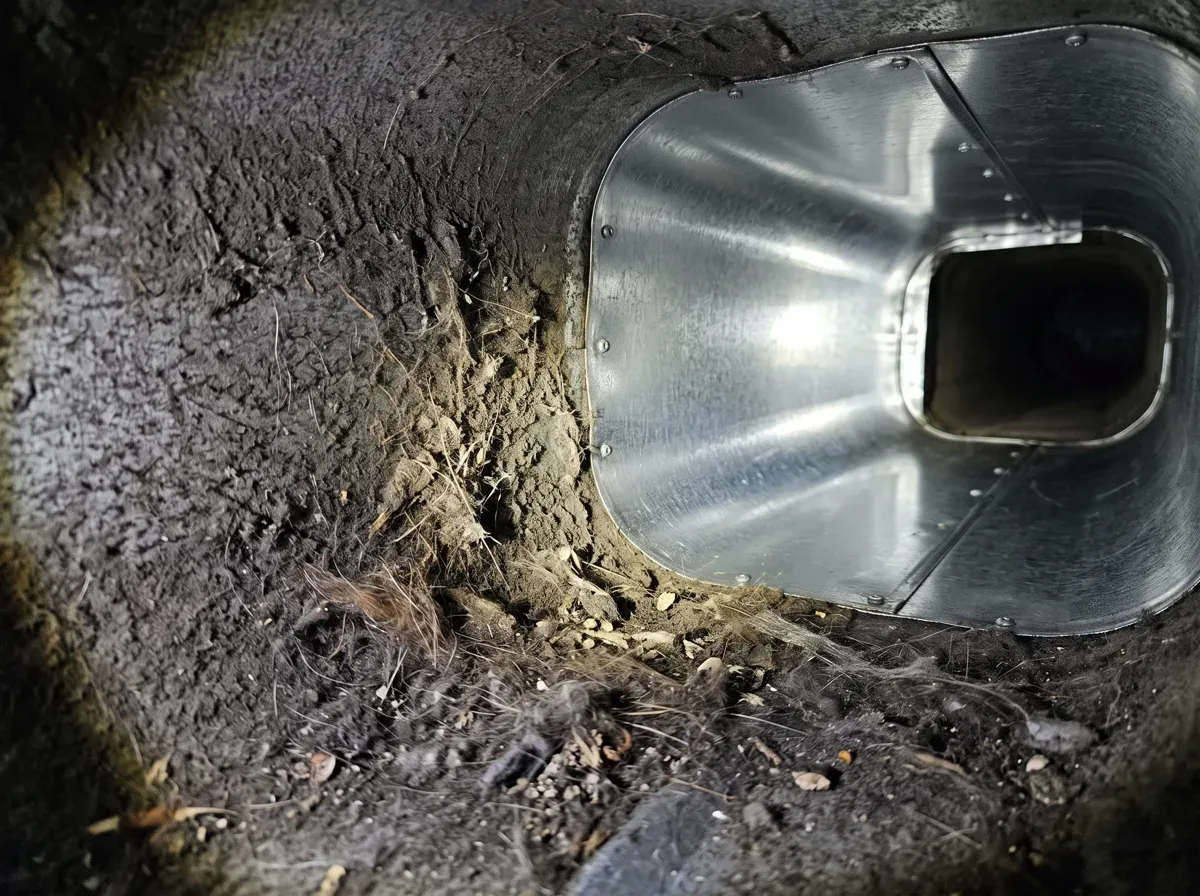
You do not need special equipment to check. Take a screwdriver, remove a floor or wall register, and shine a flashlight down the run. Then look for these:
- Visible dust and debris. A light film is normal. Thick, matted buildup or debris you can pinch between your fingers is not.
- Mold. Fuzzy or discolored growth on duct surfaces or on the registers themselves. Have the moisture source found and fixed first, because cleaning alone will not stop it from coming back.
- Signs of vermin. Droppings, nesting material, or a smell you cannot trace. Mice get into basement and crawlspace ductwork more often than people expect.
- Dust that returns in days. If you wipe the furniture and it is gray again by the weekend, the ducts may be a contributor. So may a bad filter, so check that first.
- Construction residue. Drywall dust, sawdust, or paint overspray inside the vents after a project.
- Uneven airflow with a dirty look. One room that seems weak, plus visible buildup at that register, is worth a closer look.
Is Air Duct Cleaning Worth It? What the EPA Says
We would rather tell you the truth than sell you a job you do not need. The U.S. EPA publishes a page titled "Should You Have the Air Ducts in Your Home Cleaned?" and it is worth reading before you hire anyone, including us.
The EPA's position is measured. It does not say every home needs routine duct cleaning. It says cleaning is warranted when there is visible mold growth inside the ducts, when the ducts are infested with vermin, or when they are clogged with a heavy amount of dust and debris that is being released into the home. It also notes that research has not shown that cleaning ducts reduces health problems, and that dust on your furniture usually comes from things other than the ducts.
That is the honest frame. Duct cleaning removes what is in the ducts and nothing more. It will not fix a leaky return or replace a good filter.
So when is it worth the money? In our experience, when one of the conditions above applies, or when a project or a move has put a lot of fresh debris into the system. The duct cleaning benefits are real in those cases: cleaner airflow paths, less debris blowing out of the registers, and peace of mind that you are starting fresh. NADCA, the National Air Duct Cleaners Association, publishes standards for how the work should be done, which is a useful yardstick when you compare companies.
Air Duct Cleaning After a Remodel, a Move, or a New Pet
Remodels. Drywall dust is fine and it travels. Even with the vents taped off, some of it usually gets in. This is the clearest case for air duct cleaning after a remodel. Wait until the finish work is done, or you will be cleaning twice.
Moving in. You have no idea what the last family did. Pets, smoking, a leaky roof, a basement that flooded once. Cleaning before you unpack means nothing gets stirred up around your furniture. Empty houses are the easiest to service.
New pets. A dog or a cat adds hair and dander to the system within the first year. You do not need to rush, but if you started at zero pets and now have two, moving your interval from five years to three is reasonable.
Air Duct Cleaning With Pets and Allergies
Pet owners and allergy sufferers ask whether this will stop the sneezing. Maybe a little. Probably not entirely. Pet dander and pollen settle on every surface in the house, and the ducts are only one of them. The best results come from doing several things together:
- Change your furnace filter on the schedule the manufacturer gives, and use the highest grade your system can handle without straining.
- Vacuum with a sealed or HEPA-style machine.
- Wash bedding weekly.
- Keep up with carpet cleaning, since carpet holds a great deal of what pets shed.
- Clean the ducts when they actually show buildup.
The American Lung Association has a good indoor air page if you want a full checklist. Duct cleaning is one item on that list, not the whole list.
What an Air Duct Cleaning Visit Involves
Here is how a visit goes when we do it.
Before we start
We walk the house with you, note the registers and returns, and protect your floors the way we do on every job: floor mats and shoe covers go down first. Our technicians are employees, never subcontractors, and they are fully insured.
The cleaning
- Registers and grilles are removed so the openings are open.
- The supply lines that carry warm or cool air to each room are cleaned.
- The return lines that pull air back to the furnace are cleaned as well. Some companies skip them.
- The registers are cleaned before they go back on.
Debris in the return line gets pulled toward your equipment. Debris in the supply lines gets blown into your rooms.
How Long Does Duct Cleaning Take, and What Does It Cost?
Time depends on the size of the house, the number of registers, and how many separate runs the system has. A small ranch is a shorter visit than a two-story with a finished basement. We give you a time estimate when we quote so you can plan your day. You do not need to hover, and if we have access, you do not even need to be home.
On air duct cleaning cost, we will not throw out a number in a blog post. Price follows the size and layout of the system, and a quote after a conversation beats a guess. Call, tell us about the house, and we will tell you what it involves. You can also see how we handle published rates on our pricing page.
Be wary of any company that advertises one flat price before knowing anything about your house. Be just as wary of anyone who wants to spray sealants or chemical treatments inside your ducts without a specific reason.
Pair It With Dryer Vent Cleaning
Your dryer has its own duct, and it is a different problem. A clogged HVAC duct wastes energy and moves dust. A clogged dryer vent can start a fire, and the U.S. Fire Administration lists lint as a factor. Many customers book the two together.
If you are having your ducts done, ask about dryer vent cleaning at the same visit. We wrote up the details in our post on dryer vent fire risk in older Omaha homes.
Our air duct cleaning service covers homes across Omaha and Millard, and we work all through Elkhorn, Papillion, La Vista, Bellevue and beyond. Our Omaha service area page has the full list. If you are building a yearly plan, our seasonal home maintenance checklist shows where duct work fits.
FAQ
How often should you clean air ducts?
Most homes do well with cleaning every three to five years. Homes with shedding pets, smokers, or allergy sufferers may want it every two to three years. Any home should be cleaned after a remodel or if you find mold, vermin, or heavy buildup. Change your furnace filter on schedule to stretch the interval.
Is air duct cleaning worth it?
It is worth it when the ducts have visible mold, vermin, or heavy dust and debris, which is the EPA's guidance. It is also worth it after construction or when moving into a used home. It is less useful as a cure for allergies or household dust, since those have many sources beyond the ducts.
How long does duct cleaning take?
It depends on how big the house is and how many registers and runs the system has. A small home takes less time than a large two-story. We clean the registers, supply lines and return lines, and we give you a time estimate when we quote so you know what to expect before the crew arrives.
What are the signs your air ducts need cleaning?
Look for thick dust or debris at the registers, mold growth, droppings or nesting material, and construction residue after a project. Dust that comes back within days can also point to the ducts, though a clogged filter is a more common cause. Remove a register and use a flashlight to see for yourself.
Should I clean my dryer vent when I clean my air ducts?
Yes, it makes sense to book them together. The two systems are separate, and dryer vents carry a fire risk that regular ducts do not. Lint buildup is a leading factor in dryer fires. Doing both at one visit saves a trip and covers the airflow paths in your home that collect the most debris.
Sources
Tags: air duct cleaningindoor air qualityHVAChome maintenance
Doug Barrett
Founder of Executive Cleaning Services. Started cleaning windows as a UNO engineering student in 1986 and still runs the Millard shop. Writes the seasonal guides on this blog.