
The right choice depends on the window type, the height and how long the glass has gone uncleaned.
Squeegee window cleaning: how the hand method works
Squeegee window cleaning is the classic method, and it is how Doug Barrett started this company in 1986. A technician wets the glass with soapy water, loosens dirt, and draws a professional squeegee across the pane in controlled strokes to pull the water off.
The squeegee is only part of it. At Executive Cleaning Services the routine also includes:
- Detailing the edges with a cotton surgical towel, so no drip runs down from the frame.
- Wiping the sill, which catches whatever runs off.
- Washing screens with soap and water and towel-drying them, at no charge with any inside-and-out cleaning.
- Removing paint overspray and light deposits from the glass.
Hand work reaches things a brush cannot. That is why we recommend a hand first cleaning even if you plan to switch to pole maintenance afterward.
Squeegee work suits windows you can reach from a ladder or from inside. The pole method is for exteriors, so anything indoors is a hand job.
Pure water window cleaning: how deionized and filtered water works
Ordinary tap water carries dissolved minerals such as calcium and magnesium. When a drop dries on glass, the water leaves and the minerals stay behind as a white dot. That is the spot.
Pure water window cleaning removes those minerals first. Our system uses multi-stage filtration that strips out minerals and dissolved solids. Deionizing, the resin step many systems use, does the same job by swapping dissolved ions out of the water.
Water with almost nothing dissolved in it behaves differently. It pulls dirt off glass, and when it dries it leaves nothing behind. The pane dries clean without squeegeeing.
Some other benefits:
- Frames get cleaned too. Exterior frames are cleaned free as part of the pole method.
- Windows stay cleaner longer. That is a large part of the appeal.
- No ladder for most exterior glass. The technician stays on the ground.
Pure water is not suited to every window type. We will tell you which windows we recommend it for and which we do by hand.
What is a water fed pole, and does it leave streaks?
A water-fed pole is a lightweight pole with a soft brush on top. Purified water is pumped up through the pole, out through the brush, and onto the glass. The technician scrubs the pane from the ground and rinses with the same water.
Does pure water window cleaning leave streaks? On clean glass, no. Streaks come from soap residue or minerals drying unevenly, and pure water has neither. Where people see streaks, the cause is usually a dirty pane that was rinsed but never scrubbed.
A note on the first clean. If paint specks, sap or years of caked-on dirt are on the glass, the brush will not lift them. We recommend the first cleaning be done by hand to remove those. After that, the pole keeps the glass clean.
Pure water vs squeegee: side-by-side
| Question | Squeegee | Pure water pole |
|---|---|---|
| First cleaning of neglected glass | Best. Removes paint specks and caked dirt by hand. | Not ideal until a hand cleaning is done. |
| Second-story and high glass | Needs a ladder or lift. | Reached from the ground. |
| Exterior frames | Wiped by hand where reachable. | Cleaned free with the brush. |
| Storm-window exteriors | Possible, more work by ladder. | Well suited from the ground. |
| Interior glass | Yes. | Exteriors only. Inside is a hand job. |
| Drying | Squeegeed and edge-towelled. | Dries spot-free with no squeegee. |
| Stays clean longer | Standard. | Yes. Little residue left. |
| Window types | All window types. | Not suited to every type. |
Why do my windows have white spots after cleaning?
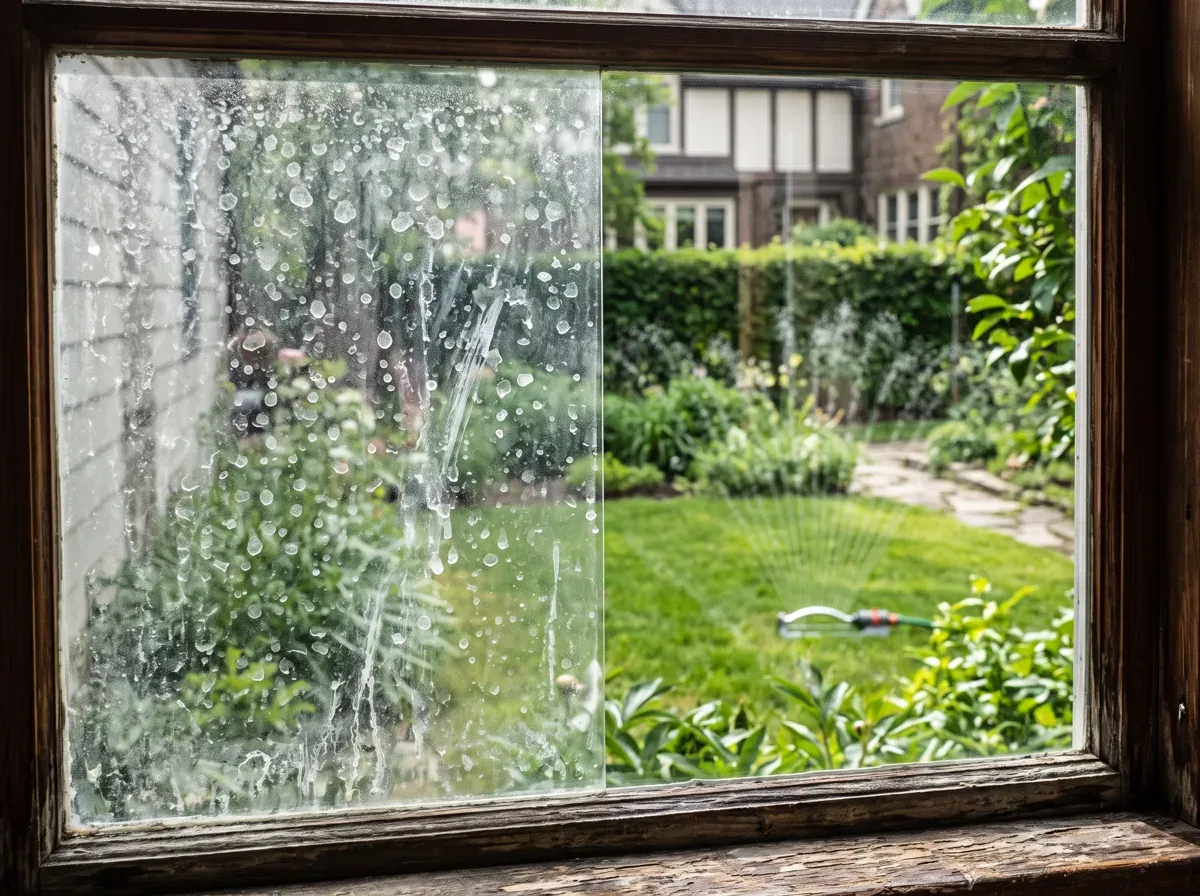
If your windows have white spots right after a cleaning, one of two things happened. The cleaner rinsed with unfiltered tap water that dried on the glass, or the spots were already there and were never removed.
Omaha water is a factor, and Nebraska Extension publishes local guidance on water quality if you want the background. Municipal water from MUD is moderately hard, so it carries dissolved minerals. Any rinse with plain hose water can leave a fine dot pattern when it dries in the sun.
Sprinklers are the second cause. A sprinkler head that sprays the house wets the same windows every cycle all summer. Each drop dries and leaves its mineral behind. After a season, those dots fuse into a cloudy, crusty film. Hard-water spots on windows near sprinklers are common across Omaha, Papillion and Elkhorn.
Signs the spots are mineral and not dirt:
- White or gray dots that follow the sprinkler's spray pattern.
- Deposits that do not wipe off with a damp cloth.
- Worst on the lowest panes and the side facing the lawn.
How to remove hard-water stains from exterior windows
For light spots you can try a home fix. For crust that has built for years, you probably need a professional.
A careful DIY approach
- Mix equal parts white vinegar and water in a spray bottle.
- Test a small corner first, in shade, and keep it off painted trim and metal frames.
- Spray, let it sit a few minutes, and agitate with a soft cloth or non-scratch pad.
- Rinse well and dry with a clean microfiber towel.
Do not use steel wool, a razor on tinted or coated glass, or abrasive powders. They scratch glass, and the scratches are permanent.
When to call
Heavy deposits are why our price list says hard-water deposits may cost a little more. They take extra time and the right tools. Our window cleaning in Omaha crew removes them as part of the job. We can quote by phone, and our window cleaning cost guide shows the numbers.
Stop the spots coming back
- Redirect sprinkler heads so they spray the lawn and not the glass.
- Rinse the glass with filtered water after any spray you cannot avoid.
- Ask for pole maintenance after a hand cleaning, to keep the glass from building new deposits.
Sprinklers stain siding and concrete too. For those surfaces, look at power washing in Omaha, which is a different tool for a different job.
Window cleaning without ladders: second-story glass
Window cleaning without ladders at second-story height works with a water-fed pole. The technician stands on the ground, cleans the upper exterior glass and frames, and rinses it clean. Windows over 24 feet may cost a little more.
Some jobs still call for a ladder, such as hand first cleanings of stubborn buildup. Our technicians are employees, never subcontractors, and they use moving blankets under ladders and wool bonnets on the ladder tops. Our gutter cleaning crew works the same way.
On a Pella window with a removable storm panel, the storm's exterior can be handled by pole. The panel still comes apart for cleaning between the layers, roughly every 18 months.
Which method should you choose?
Here is a plain way to decide:
- Never had the glass professionally cleaned? Start with a hand cleaning.
- Tall windows, second-story glass or many frames? Add pole maintenance.
- Sprinkler spots or hard-water crust? Hand cleaning first, then fix the sprinklers.
- Double-hungs with storms in an older home near downtown? Expect mostly hand work.
- Newer home with large casements and picture windows? A mix of hand and pole often fits.
If you prefer a regular schedule, our maintenance plan (quarterly, semi-monthly, monthly or more) gets priority scheduling and up to 25% off. For seasonal timing, read our spring window cleaning guide or the seasonal home maintenance checklist. We serve Omaha and Elkhorn, among other cities.
FAQ
Does pure water window cleaning leave streaks?
On clean glass, it does not. Streaks come from soap residue or minerals that dry unevenly, and purified water has neither. If you see streaks, the pane was probably dirty before the rinse. A first cleaning by hand removes paint specks and caked-on dirt, and then the pole keeps the glass clean and dries it spot-free.
What is a water fed pole?
It is a lightweight pole with a soft brush at the top. Purified water pumps up through the pole and out through the brush. The technician scrubs and rinses the glass from the ground, so second-story exteriors and frames can be cleaned without a ladder. It works for exterior glass only, so the inside is still cleaned by hand.
How do I remove hard water stains from exterior windows?
For light spots, spray equal parts white vinegar and water, test a shaded corner first, let it sit briefly, and wipe with a soft cloth. Avoid steel wool and abrasives, which scratch glass. Thick deposits from years of sprinkler spray usually need a professional. We remove hard-water deposits as part of a cleaning, sometimes for a small extra charge.
Can you clean second-story windows without ladders?
Often, yes. A water-fed pole lets a technician clean upper exterior glass and frames from the ground. Some jobs still need ladders, such as interior glass and first cleanings with paint specks or caked-on dirt. Our crew uses moving blankets under ladders and wool bonnets on ladder tops, so your home is protected whichever method we use.
Why do my windows have white spots after cleaning?
White spots are almost always dissolved minerals left when water dried on the glass. Omaha's municipal water is moderately hard, and sprinklers repeat the effect all summer. A rinse with unfiltered tap water can leave them too. Filtered water dries without residue, and a hand cleaning removes deposits already on the glass.
Sources
Tags: pure watersqueegeehard waterwindow cleaning
Doug Barrett
Founder of Executive Cleaning Services. Started cleaning windows as a UNO engineering student in 1986 and still runs the Millard shop. Writes the seasonal guides on this blog.
